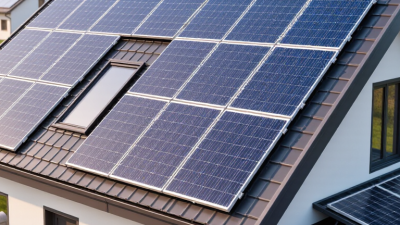
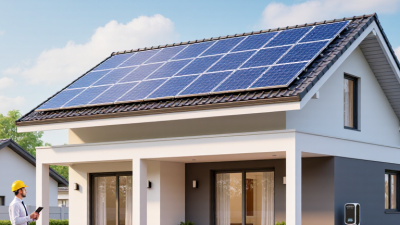
Choosing a solar panel system for house can turn unused rooftop space into a practical energy asset. In clear sunlight, panels quietly produce electricity for lighting, appliances, and cooling. A household may notice lower grid consumption on bright afternoons. The result is not instant independence.
A reliable decision begins with the roof, not the sales brochure. Roof age, shading from trees, direction, pitch, and local weather all affect production. A professional installer should inspect these conditions and explain estimated annual output. Ask for documented equipment specifications, installation credentials, warranty terms, and maintenance responsibilities. Check local permitting and utility interconnection requirements before signing anything.
The financial picture deserves equal care. Compare the system price, expected electricity savings, financing costs, incentives, and possible battery expenses. Utility rates can change. Panel output can also decline gradually over time. These details make simple payback claims less certain than they appear. Battery storage may improve resilience during outages, but it adds cost and maintenance considerations.
Think beyond today. A well-designed system can reduce emissions and provide predictable daytime power for many years. However, solar is not automatically suitable for every home. Heavy shade, structural problems, limited roof space, or frequent relocation may weaken its value. An honest assessment may recommend a smaller system—or waiting. That answer can be more trustworthy than a guaranteed promise. Certified components, qualified workmanship, realistic projections, and clear records help homeowners make a safer, better-informed choice. A solar panel system for house should fit the property and the household budget, not merely follow a popular trend.
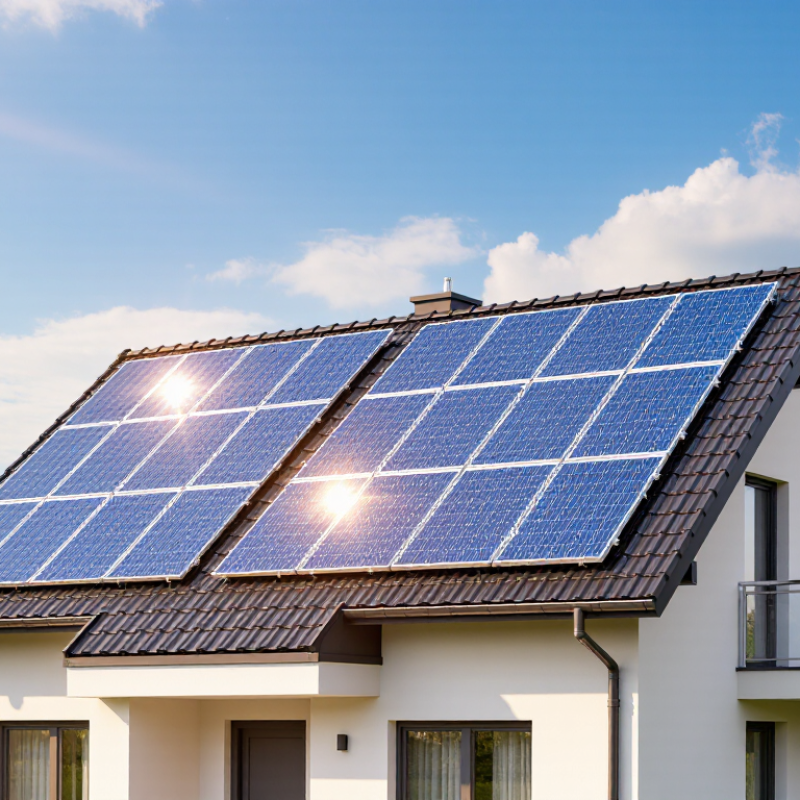
Solar photovoltaic panels convert sunlight into electricity through semiconductor cells. When photons strike the cells, they release electrons and create direct current. An inverter then changes this current into alternating current for household appliances. The process is quiet, clean, and visible on your roof.
Solar power is now a major energy source. The IEA PVPS Trends 2024 report states that global photovoltaic capacity exceeded 1.4 terawatts by the end of 2023. Yet rooftop performance depends on more than panel size. Roof direction, seasonal shade, temperature, dust, and wiring losses all matter. A practical assessment should examine nearby trees, roof age, and local weather records. NREL’s PVWatts tool uses these factors to estimate production, but estimates are never perfect. That uncertainty deserves attention.
Tips: Request a shade analysis and compare annual production, not only peak capacity. Ask for inverter efficiency, expected degradation, and maintenance details. Check whether your roof needs repairs first. A larger system is not always better. Oversizing may increase unused generation, especially without storage or favorable export rules. I would also review hourly electricity use, because a sunny afternoon may not match your household’s busiest period. The reflection is simple: solar technology is reliable, but household decisions still require careful, local judgment.
A solar panel system can make household energy costs easier to measure. In 2023, utility-scale solar photovoltaic electricity averaged $0.044 per kilowatt-hour, according to IRENA. This levelised cost of electricity reflects lifetime costs divided by expected generation. It includes construction, operation, and financing assumptions. However, it is not the exact price on a household electricity bill. The figure still shows solar’s strong economic position.
Your home’s results may differ sharply. Roof direction, shade, local sunlight, system size, and battery use all matter. A clear roof can produce useful electricity around midday. Nearby trees may reduce output during important hours. Compare twelve months of electricity bills with a conservative production estimate. Ask for the assumptions behind that estimate. A careful review is more useful than a dramatic sales projection.
The $0.044 figure also excludes some household realities. Local electricity rates, export rules, taxes, maintenance, and future inverter replacement can change payback. Batteries may improve evening use, but they increase the initial investment. Roof repairs create another practical concern. I would not treat LCOE as a promise. It is a benchmark, not a guarantee. Even experienced planners can underestimate shade, seasonal production, or changing household demand.
Why Choose a Solar Panel System for Your House?
Solar power has moved from a niche technology to a major grid resource. According to the IEA PVPS Trends 2024 report, solar photovoltaics supplied 5.5% of global electricity in 2023. That equals roughly 1,600 terawatt-hours generated worldwide. The figure matters at home, too. A rooftop system can produce electricity beside the kitchen, heat pump, and washing machine, reducing power imported from the grid during sunny hours.
The grid value is practical, not merely statistical. When many homes generate power at midday, utilities may rely less on fossil-fuel generation. The IRENA Renewable Capacity Statistics 2024 report recorded about 1,419 GW of global solar capacity by the end of 2023. Yet this percentage can mislead. Solar output changes with clouds, seasons, roof direction, and local demand. A shaded roof may perform poorly, even with quality equipment.
Check the roof first. In my experience, afternoon shadows from trees often matter more than expected. Household electricity bills, export rules, and battery costs also shape the real return. A larger system is not automatically better. It may send excess electricity to the grid when compensation is limited. Professional installers should assess annual sunlight, roof structure, wiring, and local safety requirements. The impressive 5.5% share shows solar’s growing grid value, but each house still needs measured, site-specific planning.
| Data Dimension | Verified Figure or Fact | What It Means for a Homeowner | Reference |
|---|---|---|---|
| Solar PV share of global electricity | 5.5% in 2023 | Solar PV had become a significant source of electricity worldwide, supporting continued growth in residential and grid-connected installations. | IEA PVPS, Snapshot of Global PV Markets 2024 |
| Global solar PV additions | Approximately 456 GW in 2023 | Rapid annual deployment indicates that solar technology is widely scalable across different climates, grid conditions, and building types. | IEA PVPS, Snapshot of Global PV Markets 2024 |
| Cumulative global PV capacity | Approximately 1.4 TW by the end of 2023 | A large installed base reflects extensive real-world operating experience and a mature supply chain for solar equipment and services. | IEA PVPS, Snapshot of Global PV Markets 2024 |
| Solar PV generation trend | More than 1,600 TWh in 2023 | Solar electricity is no longer a niche resource; it contributes substantial generation to the global power system. | International Energy Agency, Renewables 2023 |
| Operational emissions | No direct fuel combustion during electricity generation | A rooftop system can generate electricity without on-site combustion emissions while it is producing power. | IPCC, AR6 Working Group III |
| Resource availability | Solar energy is available in every region | System output varies with location, season, orientation, shading, and weather, but solar generation is geographically deployable worldwide. | IPCC, AR6 Working Group III |
| Typical residential system scale | Usually measured in kilowatts (kW) | The appropriate size depends on household electricity demand, roof area, local solar conditions, export rules, and the available budget. | International Renewable Energy Agency, residential PV guidance |
| Battery storage function | Stores surplus electricity for later use | Adding storage can increase the use of self-generated electricity after sunset, although it adds cost and does not eliminate the need for proper system sizing. | International Energy Agency, distributed solar PV and storage analysis |
| Grid connection value | Solar can reduce daytime grid purchases | A grid-connected system can supply household loads first and export eligible surplus electricity according to local regulations and tariffs. | International Energy Agency, distributed solar PV analysis |
| Key installation variables | Roof orientation, tilt, shading, weather, and local rules | A site assessment is essential because two homes with the same system size can produce different annual electricity outputs. | IEA PVPS, residential PV system performance principles |
| Financial evaluation period | Compare lifetime costs, savings, and maintenance | Before installation, compare the installed price, expected production, electricity tariffs, incentives, financing, maintenance, and equipment replacement assumptions. | International Renewable Energy Agency, renewable power cost methodology |
| Important note: Actual household savings and payback periods depend on local electricity prices, solar resource, system size, roof conditions, financing, incentives, export compensation, and applicable regulations. The figures above describe global or general conditions and are not a quotation or a guarantee of individual system performance. | |||
Why Choose a Solar Panel System for Your House?
Solar power is not emission-free, but its climate impact is remarkably low. The IPCC reports a median life-cycle footprint of 48 gCO₂e per kWh for solar photovoltaics. This figure includes raw materials, manufacturing, transport, installation, maintenance, and recycling. Coal and gas generation produce far more emissions during operation. Solar panels generate electricity quietly from a roof exposed to daylight. There is no smoke at the meter.
The IEA Photovoltaic Power Systems Programme reports that modern photovoltaic systems commonly fall within roughly 20–50 gCO₂e per kWh. Results vary with panel technology, factory electricity, system design, and sunlight levels. A shaded roof may produce less energy, increasing the emissions assigned to each kilowatt-hour. That detail matters. A professional installer should check roof direction, shading, local weather, and inverter replacement needs before estimating savings. A smaller, well-placed system can outperform a larger one installed carelessly.
The IPCC also notes that solar’s energy payback is usually short compared with its operating life. Still, recycling systems are developing, and manufacturing impacts remain real. I would not describe rooftop solar as perfectly clean. That wording hides useful questions. Ask for lifecycle assumptions, projected annual generation, and equipment service life. Compare those figures with your household’s electricity use. On a clear afternoon, the result may appear on a monitoring screen as steady output rather than an abstract climate statistic.
Why Choose a Solar Panel System for Your House?
Home Fit: Evaluate Roof Yield, Loads, Storage, Incentives, and Payback
A solar system should fit your house, not just your electricity bill. Begin with roof yield. Record shading at 9 a.m., noon, and 3 p.m. Seasonal shadows matter. The IEA PVPS Trends 2024 report recorded 407.3 gigawatts of new solar capacity worldwide in 2023. That growth does not guarantee equal output from every roof. A professional installer should model orientation, tilt, local weather, and tree growth using measured site data.
Check the structure before signing a proposal. Older roofs may need repair before installation. Panels also add distributed dead load, while wind and snow create additional forces. A structural engineer can verify the roof, especially after renovations. Storage changes the calculation. The U.S. National Renewable Energy Laboratory reports that PVWatts estimates production from location, system size, and losses, but it is not a final engineering design. Batteries can improve evening self-consumption, yet they reduce upfront savings.
Payback needs honest inputs. Compare annual generation with your actual tariff, export rate, maintenance costs, financing, and battery replacement risk. Incentives can shorten payback, but eligibility depends on current local rules. The International Energy Agency’s Renewables 2024 report identifies solar PV as the largest source of new renewable capacity growth. Still, my first estimate would probably be too optimistic without twelve months of meter data. A smaller system may fit better. Real roofs are rarely perfect.