Become a SmartFlower
Dealer or Installer.

China Top Solar Power Manufacturers for Global Buyers?

China has become a central manufacturing base for the global solar power industry. Its leading companies supply photovoltaic modules, inverters, batteries, mounting systems, and complete energy solutions. For international buyers, this scale creates strong price advantages and broad product choices. It also makes supplier evaluation more important.

“Solar PV is now the cheapest source of electricity in history,” says Fatih Birol, Executive Director of the International Energy Agency. His observation explains the market’s rapid expansion, but low prices alone should not decide a purchasing contract. A reliable buyer must examine module efficiency, temperature performance, degradation rates, factory capacity, and delivery records. Ask for test reports, warranty terms, and evidence of consistent quality. Small details matter. A scratched frame, unclear serial number, or delayed spare part can become expensive on a remote project.

This guide introduces China’s top solar power manufacturers for global buyers. It focuses on manufacturing strength, product reliability, export experience, certifications, and after-sales support. Major names may look similar on a spreadsheet. They are not always similar in practice. Some companies excel at utility-scale modules, while others perform better in distributed systems or integrated storage.

The comparison also considers practical buying risks, including communication gaps, changing specifications, and logistics delays. No supplier is perfect. Buyers should verify current data independently before signing. A factory visit helps, but it cannot replace third-party testing. The most suitable manufacturer is not necessarily the cheapest. It is the partner that delivers dependable performance, transparent documentation, and realistic support throughout the project lifecycle.
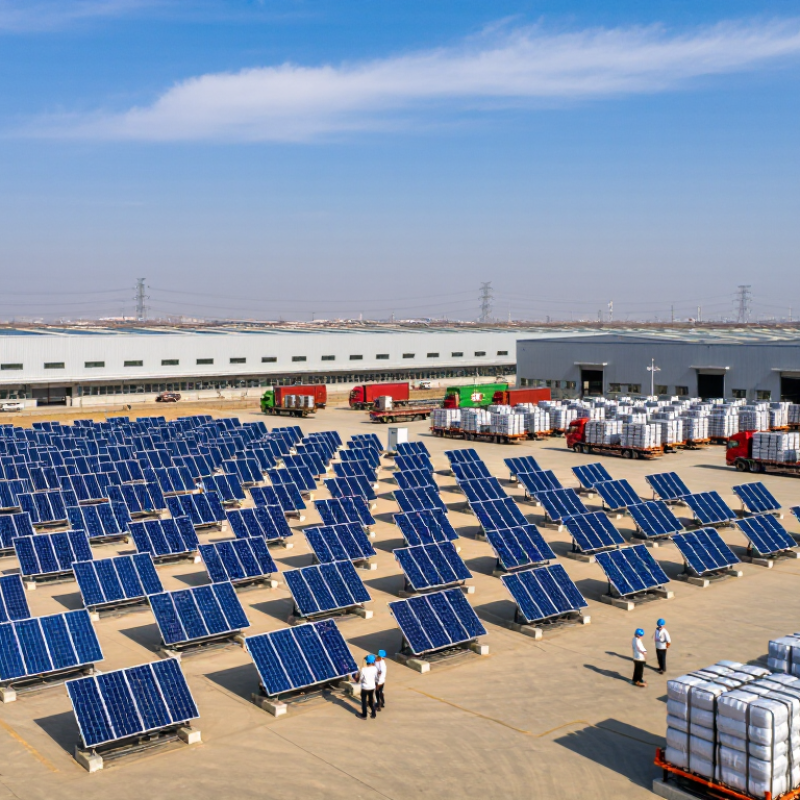
China Top Solar Power Manufacturers for Global Buyers?

How China’s Solar Manufacturing Industry Is Organized

China Top Solar Power Manufacturers for Global Buyers?

How China’s Solar Manufacturing Industry Is Organized

China’s solar manufacturing industry is organized as a connected production network, not a single factory model. Upstream companies refine polysilicon and produce ingots and wafers. Cell manufacturers then convert wafers into electrical units. Module producers assemble these cells with glass, encapsulant, frames, junction boxes, and cables. Supporting suppliers provide equipment, testing services, packaging, and transport.

Some manufacturers control several stages. Others specialize in one process and depend on carefully selected partners. This creates efficiency, but it can make supply chains difficult to inspect. A factory may present an impressive assembly line while sourcing critical components elsewhere. That detail matters. Global buyers should request a clear bill of materials, production locations, quality records, and batch traceability.

In practical procurement, factory visits reveal more than online catalogs. Buyers can examine cell storage, soldering control, cleanliness, worker training, and finished-module testing. Independent checks should cover electroluminescence images, power tolerances, insulation, damp-heat performance, and packaging strength. Documentation should match the actual shipment, not only a sample order. Certification is important, yet it does not replace process control.

The industry is highly capable, but it is not perfectly uniform. Some suppliers communicate clearly; others provide incomplete technical answers. That weakness deserves attention. A reliable partner should explain warranty terms, replacement procedures, production capacity, and changes to materials. Price alone is a poor guide. A slightly higher quotation may reflect stronger testing, better traceability, and fewer surprises after installation.

Key Criteria for Comparing Chinese Solar Power Manufacturers

China Top Solar Power Manufacturers for Global Buyers?

Comparing Chinese solar power manufacturers requires more than checking price lists. IRENA’s Renewable Capacity Statistics 2024 recorded 346 gigawatts of new solar capacity worldwide in 2023. That scale increases buyer pressure on quality, delivery, and long-term service. Examine annual production capacity, factory automation, and independent audit records. Ask whether output figures match audited financial statements. Paperwork is never proof.

Technical performance deserves closer attention. Compare module efficiency, temperature coefficient, power degradation, and warranty conditions. Request test reports from accredited laboratories, not only internal certificates. The IEA’s 2024 analysis indicates China retains over 80% of global solar module manufacturing capacity. This concentration can support competitive costs, but it also creates supply-chain exposure. Check polysilicon traceability, production locations, shipping records, and contingency plans.

Bankability should include evidence, not reputation. Review at least three years of failure-rate data, insurance coverage, spare-parts policies, and response times. Ask for references from projects operating in climates similar to yours. A strong supplier should explain weaknesses clearly. No scorecard is perfect. My own caution is simple: a low bid may hide stricter payment terms, weaker monitoring, or expensive replacement logistics. Compare the delivered energy cost, not only the module price.

China Top Solar Power Manufacturers for Global Buyers

Key Criteria for Comparing Chinese Solar Power Manufacturers

This reference framework prioritizes the criteria commonly checked during international solar procurement. Buyers should verify each manufacturer's current technical datasheets, IEC certifications, factory audit results, warranty terms, bankability, delivery record, and after-sales support before making a final decision. The percentages represent a practical evaluation allocation, not company performance data.

Leading Chinese Manufacturers by Solar Product Category

China Top Solar Power Manufacturers for Global Buyers?

Leading Chinese Manufacturers by Solar Product Category

China’s solar industry is best understood by product category, not by factory size alone. In photovoltaic modules, leading manufacturers typically offer monocrystalline products, bifacial designs, and different power outputs. Buyers should inspect cell technology, degradation rates, factory capacity, and independent test reports.

A module may look impressive on paper. Its performance under heat, dust, and partial shade matters more.

Inverters

Inverters form another important category. Chinese producers supply string, central, and hybrid inverters for homes, commercial buildings, and utility projects. Buyers should check grid compatibility, protection features, software access, and local service coverage.

Energy Storage Manufacturers

Energy storage manufacturers usually provide lithium-based battery systems, battery cabinets, and integrated control units. Look for cycle-life data, thermal management, fire protection, and clear warranty terms.

Small details matter here.

Mounting-System Manufacturers

Mounting-system manufacturers supply aluminum rails, steel structures, roof brackets, and trackers. Their designs must match local wind, snow, corrosion, and building requirements. I have seen projects delayed because fasteners did not suit coastal conditions. That mistake is avoidable, but product catalogs rarely reveal everything.

Ask for material certificates, installation guides, sample inspections, and production records. Also review export experience, quality-control procedures, and after-sales response times.

A lower price can hide packaging weakness, slower communication, or expensive replacement logistics. Manufacturer rankings are useful, but they should never replace technical verification.

How Global Buyers Can Evaluate Quality, Cost, and Capacity

Global buyers assessing China’s solar manufacturers should examine quality, cost, and capacity as connected risks. China supplied over 80% of global solar manufacturing capacity in 2023, according to the International Energy Agency’s Renewables 2024 report. Scale is impressive. It does not guarantee consistency.

Request IEC 61215 and IEC 61730 test records, factory quality procedures, and recent third-party inspection results. Check electroluminescence images, power tolerances, warranty terms, and degradation assumptions. A useful factory visit should include cell sorting, lamination, flash testing, and random carton inspections. I have found that paperwork can look excellent while process discipline varies between production lines. That uncomfortable gap deserves attention.

Cost comparisons should include freight, insurance, tariffs, installation compatibility, financing, and expected energy yield. The lowest invoice may not deliver the lowest lifetime cost. IRENA reported 345.5 gigawatts of solar capacity additions worldwide in 2023, showing intense demand and supply pressure. Buyers should also verify audited annual output, operating lines, workforce shifts, raw-material sources, and shipment records. Compare nameplate capacity with actual monthly production. Capacity claims can be optimistic. A practical contract should define inspection rights, replacement procedures, delivery milestones, and measurable acceptance criteria. According to the IEA, China held more than 80% of module manufacturing capacity in 2023, making supplier evaluation more important, not less.

China Top Solar Power Manufacturers for Global Buyers: How to Evaluate Quality, Cost, and Capacity
Practical supplier-screening benchmarks for crystalline-silicon photovoltaic module procurement
Evaluation Dimension Key Metric Typical Market Reference What Global Buyers Should Verify Suggested Weight
Product Performance Module power output Approximately 540–720 Wp for current large-format crystalline-silicon modules Check the datasheet, cell configuration, dimensions, operating current, operating voltage, and compatibility with the selected inverter and mounting system. 10%
Product Performance Module efficiency Approximately 20%–23.5% for mainstream high-efficiency crystalline-silicon modules Compare efficiency under the same test conditions and confirm whether the quoted rating is based on standard test conditions. 8%
Product Reliability Product warranty Commonly 12–15 years for standard modules; longer terms may be offered for selected product lines Review the warranty issuer, claim procedure, territorial coverage, exclusions, response time, and whether the warranty is transferable. 8%
Product Reliability Power-performance warranty Typically 25–30 years, with first-year degradation commonly around 1% and later annual degradation around 0.35%–0.50% Confirm the guaranteed end-of-term output, degradation formula, measurement method, and remedy for underperformance. 10%
Certification International product standards IEC 61215 for design qualification and IEC 61730 for photovoltaic module safety are widely used international references Request valid certificates and verify that the certificate model, factory location, and electrical ratings match the offered product. 8%
Factory Quality System Management-system certification ISO 9001 quality management, ISO 14001 environmental management, and ISO 45001 occupational health and safety systems are common buyer requirements Check certificate validity, certification scope, issuing body, audit status, and whether the certificate covers the actual production site. 6%
Quality Control Production and inspection controls Automated cell sorting, electroluminescence testing, visual inspection, flash testing, and final-label verification are standard controls for export-grade modules Request the quality-control plan, inspection frequency, defect classification, sample reports, calibration records, and acceptance criteria. 10%
Environmental Durability Resistance to climate and mechanical conditions Relevant tests may include damp heat, thermal cycling, humidity-freeze, hail, mechanical-load, salt-mist, and ammonia-resistance testing, depending on the project location Match the test evidence to the site risk, including coastal salt exposure, agricultural ammonia, high humidity, snow load, wind load, and hail conditions. 8%
Cost Evaluation Module purchase price Indicative export quotations can vary widely, often roughly within US$0.08–US$0.16 per Wp depending on technology, order size, payment terms, delivery terms, and market conditions Compare identical specifications on the same Incoterm, currency, payment schedule, quantity, packaging method, and delivery destination. 10%
Cost Evaluation Total landed cost Landed cost should include module price, inland transport, export handling, freight, insurance, duties, taxes, inspection, warehousing, and local delivery Use a total-cost model rather than comparing the factory quotation alone. Confirm tariff classification and destination-country import requirements. 8%
Manufacturing Capacity Annual production capability Large export-oriented production sites may operate at multi-gigawatt annual scale, while smaller qualified facilities may offer sub-gigawatt capacity Verify actual capacity by factory, production-line count, utilization rate, recent shipment records, and whether the quoted capacity is owned or outsourced. 6%
Supply Security Delivery and allocation capability A credible supplier should provide a production schedule, batch allocation plan, confirmed lead time, and logistics milestones Request a binding delivery schedule, late-delivery remedy, shipment documents, packaging specifications, and a contingency plan for material or logistics disruptions. 6%
Financial and Commercial Risk Payment protection Common structures include staged payments linked to production, inspection, shipping documents, or letter-of-credit milestones Assess the supplier's legal entity, bank-account ownership, credit terms, refund provisions, performance bond options, and inspection rights before final payment. 6%
After-Sales Support Technical service and claims handling International projects generally require documented RMA procedures, technical documentation, serial-number traceability, and multilingual communication Confirm response-time commitments, local service arrangements, spare-parts policy, remote troubleshooting process, and escalation contacts. 4%
Note: The figures shown are practical industry screening references rather than quotations or guarantees. Actual specifications, prices, capacity, certifications, delivery times, and warranty terms should be confirmed through current technical documents, factory audits, third-party inspections, and project-specific contracts.

Import, Certification, and Supplier Verification Considerations

China Top Solar Power Manufacturers for Global Buyers?

Importing solar equipment requires more than comparing prices and wattage. Buyers should confirm the correct HS code, shipping documents, packing details, and importer responsibilities before payment. Customs rules vary by destination. Check them locally.

Certification must match the product and market. Request current test reports, declarations of conformity, factory quality records, and applicable safety certificates. Verify the certificate number with the issuing laboratory, not only with the supplier. Check whether the tested model matches the delivered model, including power rating and electrical design.

Paperwork matters. A certificate alone is not proof of consistent production.

Supplier verification should combine documents with physical evidence. Ask for a business license, export history, production photographs, and traceable serial numbers. A third-party factory audit can review cell storage, lamination temperature logs, insulation testing, and final inspection procedures. Order samples before a large shipment, then use an independent inspection before loading.

I once treated a polished report as strong evidence; that was too optimistic.

Supplier claims can change between batches. Keep payment milestones linked to inspection results, warranty terms, and agreed specifications. Also confirm who handles defective units, replacement freight, and technical support after installation.

That gap matters. Experienced buyers leave room for rechecking assumptions, because a smooth first conversation does not guarantee reliable long-term supply.