Choosing solar panels in 2026 means comparing more than headline efficiency. A high-output module may suit a commercial roof with limited space, while a home with ample roof area may benefit more from dependable performance, strong warranties, and a sensible installed price. Shade, roof direction, local weather, and the inverter can all change the real-world result. Details matter.
The International Energy Agency’s Renewables 2024 report forecasts nearly 5,500 gigawatts of new renewable capacity worldwide between 2024 and 2030, with solar photovoltaics accounting for almost 80% of the increase. IEA Executive Director Fatih Birol has described the trend this way: “Solar PV is the new king of electricity markets around the world.” That momentum is significant, but it does not make every panel right for every building. A shaded dormer or a hot warehouse roof can expose limits that a product brochure barely mentions.
This guide compares ten solar panels for homes and businesses, focusing on efficiency, power output, warranties, temperature performance, and practical value. It draws on manufacturer specifications and established industry reporting, while recognizing that product availability and pricing vary by market. No panel wins every roof. Even a strong ranking cannot replace a site assessment or a careful review of installer workmanship. Use these selections as a starting point, then check the numbers against your roof, electricity use, and long-term plans.
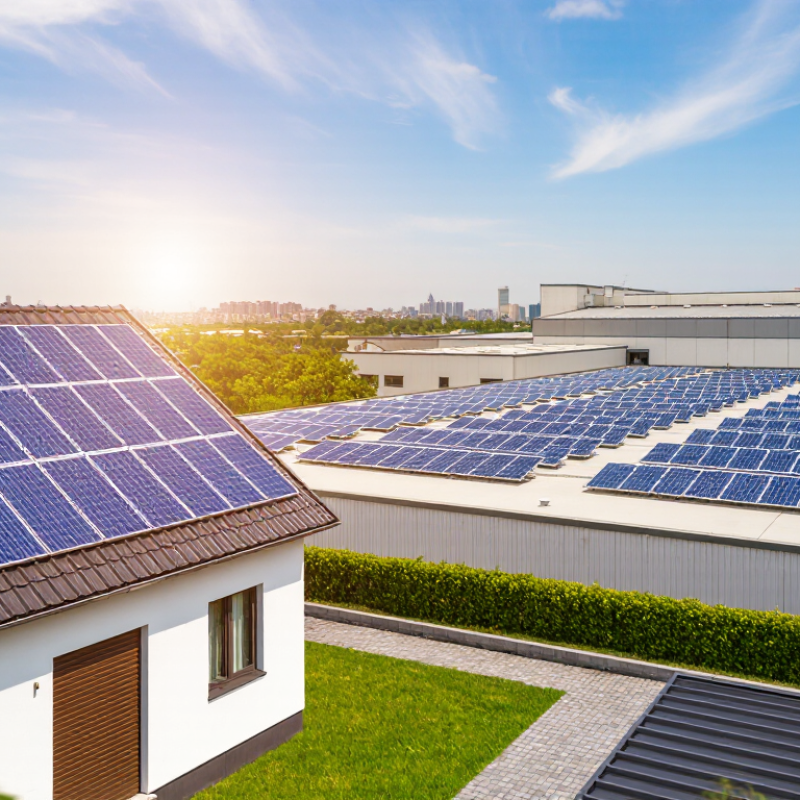
Solar panels turn sunlight into electricity through photovoltaic cells, usually made from silicon. When sunlight reaches a cell, photons transfer energy to electrons. The cell’s internal electric field pushes those electrons in one direction, creating direct current, or DC. Small cells are wired together to form a panel. That is the basic mechanism.
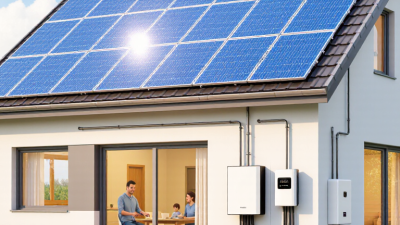
Most household appliances use alternating current, or AC, so an inverter changes the panels’ DC output into usable AC. In a typical grid-connected system, electricity flows through a home’s electrical panel; surplus power may flow back to the grid, depending on the system and local arrangements. A battery can store some electricity for later use, but storage adds equipment and losses. Not magic.
Actual output shifts through the day. A sharp shadow from a chimney, dust on the glass, cloud cover, or high panel temperatures can reduce production. The rated capacity is measured under standard test conditions, not every rooftop’s daily reality. A useful assessment considers roof direction, shading, local weather, and household energy use. Even careful estimates carry uncertainty, so monitoring real production after installation can reveal gaps between expectations and performance.
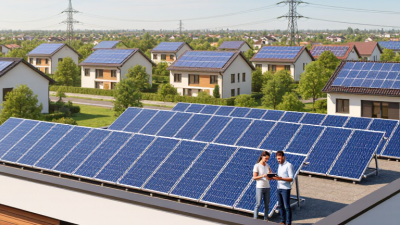
Compare panels by lifetime energy, not headline wattage alone. A 450-watt module may produce less on a hot, partly shaded roof than its label suggests. Check temperature coefficient, low-light performance, dimensions, and the installer’s layout. Small details matter.
A 2013 National Renewable Energy Laboratory review found median photovoltaic degradation near 0.5% per year across published studies. That is a useful benchmark, not a promise for every panel or climate. Compare warranty terms with independent test data, and ask whether output guarantees describe year-one performance or long-term production. Read the fine print.
Efficiency affects how much power fits on a limited roof; it does not automatically make a panel the best value. The IEA PVPS report Trends in Photovoltaic Applications 2024 estimated 456 GW of new solar capacity was installed worldwide in 2023. In a fast-growing market, verify test certification, product traceability, and service arrangements rather than relying on a single efficiency figure. I would also compare installed cost per expected kilowatt-hour, though estimates depend on shade, orientation, and local weather. That part is less tidy than a spec sheet.
Compare these brand-neutral panel types by typical module-level specifications and intended use. Ratings vary by model, size, and market; check the current product datasheet and warranty before purchasing.
| Panel Type | Typical Module Power | Typical Module Efficiency | Typical Power Temperature Coefficient | Key Advantages | Best Fit | Important Comparison Check |
|---|---|---|---|---|---|---|
| N-type TOPCon, monofacial | About 400–500 W | About 21%–23.5% | Approximately −0.29% to −0.35%/°C | High efficiency, broad product availability, and no rear-side generation requirement. | Residential rooftops and small commercial roofs with limited space. | Compare module dimensions, shade behavior, and the warranted annual power loss. |
| N-type TOPCon, bifacial | About 500–700 W, depending on format | About 21%–23.5% on the front side | Approximately −0.29% to −0.35%/°C | Can produce additional energy from light reaching the rear surface. | Commercial rooftops, carports, and ground-mounted systems with reflective or open surroundings. | Rear-side gain is site-dependent; compare bifaciality, mounting height, and surface reflectance. |
| HJT (heterojunction), bifacial | About 400–700 W, depending on format | About 21.5%–24% | Approximately −0.24% to −0.30%/°C | Often has a relatively low temperature-related power loss and can support bifacial designs. | Hot climates, premium residential installations, and commercial sites suited to bifacial modules. | Compare the actual temperature coefficient and the added value of rear-side generation at the site. |
| Back-contact (IBC or similar) | About 400–500 W | About 22%–24.5% | Approximately −0.29% to −0.35%/°C | High front-side efficiency; electrical contacts are placed on the rear of the cells. | Space-constrained homes where maximizing output per roof area is important. | Compare cost per installed watt and output per usable roof area, not efficiency alone. |
| P-type PERC, half-cut | About 350–460 W | About 19%–22% | Approximately −0.34% to −0.40%/°C | Mature technology with a wide range of module formats and established installation practices. | Budget-conscious projects where roof area is sufficient and compatible modules are available. | Check remaining product availability, degradation terms, and the total system cost. |
| Large-format N-type commercial module | About 550–750 W | About 21%–23.5% | Approximately −0.29% to −0.35%/°C | Higher power per module can reduce the number of modules needed in large installations. | Warehouses, factories, solar carports, and ground-mounted commercial systems. | Confirm module size and weight, roof loading, handling requirements, and inverter compatibility. |
| Cadmium telluride (CdTe) thin-film | Commonly about 400–550 W for utility-scale formats | Often about 17%–20% | Generally around −0.25% to −0.30%/°C | Thin-film construction and a comparatively modest temperature-related power loss in many products. | Large ground-mounted projects and sites where module format and system design suit thin film. | Check local availability, module dimensions, mounting design, and recycling arrangements. |
| CIGS thin-film | Varies widely by module format; often lower per module than rigid crystalline panels | Typically below mainstream high-efficiency crystalline modules | Product-specific; verify the datasheet | Can be made in lightweight or flexible formats for applications where conventional rigid modules are unsuitable. | Specialty roofs, curved surfaces, or lightweight applications, subject to product certification. | Compare certified output, durability, fire rating, and warranty carefully; specifications vary widely. |
| Lightweight crystalline-silicon module | About 300–450 W, depending on construction and size | Often about 18%–22% | Usually similar to its underlying cell technology; verify the datasheet | Lower weight can help where roof loading limits the use of conventional framed modules. | Buildings with weight constraints, subject to structural and fire-safety approval. | Confirm attachment method, roof compatibility, wind-load rating, and product-specific service life. |
| Building-integrated PV (BIPV) | Varies by product and building element | Varies by cell technology, glazing, and design | Product-specific; verify the datasheet | Can serve as part of a roof, façade, canopy, or other building component while generating electricity. | New construction or major renovations where solar elements can be incorporated into the building design. | Compare electrical output alongside building-code compliance, waterproofing, replacement access, and total installed cost. |
Values are indicative ranges, not guarantees or a ranking. Temperature coefficients describe the approximate change in maximum power for each 1°C rise in cell temperature above the stated reference temperature. Bifacial energy gain depends on installation conditions and is not guaranteed by front-side module efficiency.
The 10 Best Solar Panels for Homes and Businesses in 2026 depend on the roof, climate, budget, and daily electricity use. A high-rated panel can still be a poor fit if it crowds a small roof or performs poorly in local heat. Compare verified efficiency, temperature performance, product warranties, and independent test data. Fit matters.
Useful options include high-efficiency panels for limited roof space; value-focused panels for larger roofs; low-light performers for cloudy regions; and heat-tolerant panels for hot areas. Compact formats suit narrow roof sections, while lightweight designs may help where structural load needs review. Bifacial panels can work well over reflective commercial surfaces, but need suitable mounting and site conditions. Glass-glass construction may offer added protection, though its extra weight matters. Flexible panels serve unusual surfaces, not every home. A final strong choice is a panel with clear material sourcing and end-of-life information.
Numbers can mislead. Ask an installer to model annual output using your roof angle, shade, and utility bills, then compare the estimate with the system’s installed cost. For businesses, check daytime demand and available roof area; for homes, consider future loads such as an electric vehicle. I would not treat any ranking as universal. Installation quality, inverter compatibility, and ventilation can affect real-world results, and estimates remain estimates. Have roof condition and electrical capacity assessed before choosing.
Choosing solar panels starts with the building, not the product sheet. For a home, compare annual electricity use with usable roof space and local sunlight. A small roof with vents or afternoon shade may benefit from higher-efficiency panels. More roof area can make standard-efficiency options practical. Check the roof’s age, too. Installing panels just before a major roof repair can mean extra labor later.
Look beyond peak wattage. Panel ratings use standard test conditions, which may differ from hot rooftop conditions. Ask for expected annual production, shading assumptions, and estimated system losses. A detailed proposal should explain these figures in plain language. It should also identify equipment warranties and who handles service. Small details matter.
Commercial sites have different demands. Review interval-meter data, operating hours, and seasonal loads before sizing a system. A warehouse may have broad roof space but strict structural limits or equipment access paths. A shop may use much of its power during daylight, making production timing especially relevant. I would not choose a system from one month’s bill alone. That can mislead. Compare several months, check future expansion plans, and have a qualified professional assess the roof and electrical capacity. The best fit is not always the panel with the highest rating.
Before comparing solar panels, inspect the roof at different times of day. A chimney shadow at noon can hide a problem that a sunny sales photo misses. Ask an installer to estimate annual production using your roof angle, local weather, and nearby trees. Check the roof’s age and structure before signing; panels may stay in place for decades. If repairs are likely, handle them first. Not glamorous, but important.
Compare system size against your actual electricity bills, not a broad household average. Review panel efficiency, temperature performance, product and output warranties, and what each warranty excludes. Ask whether the quoted output assumes battery storage, and confirm your electrical panel can support the proposed setup.
Get itemized costs for equipment, labor, permits, monitoring, and future service. A low quote can leave gaps. Verify installer training and insurance, and request references for similar roofs nearby.
It is tempting to chase the highest panel rating. Pause and check the assumptions behind the production estimate; weather varies, and projected savings are not guarantees.