Top Tips for Choosing the Right Pcb Current Transformer?
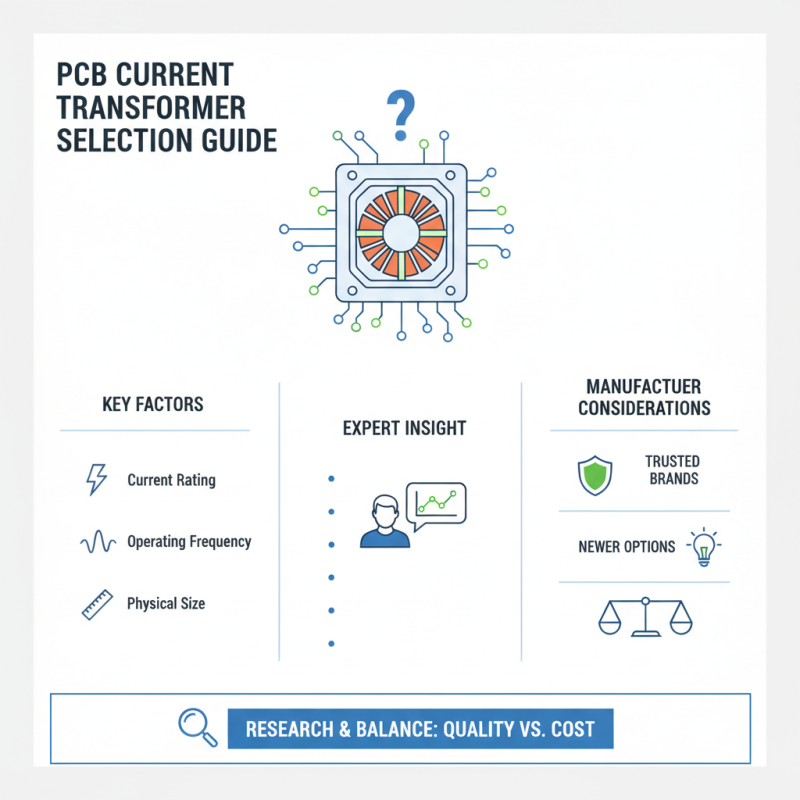
Choosing the right Pcb Current Transformer is crucial for any electrical project. According to Dr. Emily Carter, a leading expert in transformer technology, “The selection of a Pcb Current Transformer can significantly impact performance and efficiency.” This emphasizes the importance of making an informed decision.
When selecting a Pcb Current Transformer, consider several factors. These include the current rating, the operating frequency, and the physical size of the transformer. Each aspect influences how effectively the transformer will function in your circuit. Pay attention to specifications that align with your project’s needs.
Moreover, don’t overlook the reputation of the manufacturer. Trusted brands often provide higher reliability and performance. However, some lesser-known manufacturers may offer competitive products at lower prices. It’s essential to research thoroughly and weigh the pros and cons of each option. Balancing quality with cost can be complex but is necessary for achieving the best outcome.
Understanding the Basics of PCB Current Transformers in Electrical Engineering
Understanding PCB current transformers is crucial in electrical engineering. These devices are essential for measuring electrical current in various systems. They provide accurate readings, which help ensure safety and efficiency.
When selecting a PCB current transformer, consider your application's requirements. Factors like current range, frequency response, and physical size are important. Ensuring compatibility with existing systems will minimize future adjustments.
Make sure to evaluate the installation process. A well-designed transformer should fit seamlessly into your setup. Always check for potential electromagnetic interference that might affect performance. It’s wise to consult industry standards to ensure reliability. Seek user feedback on different models for a well-rounded perspective.
Key Specifications to Evaluate When Selecting a PCB Current Transformer
When selecting a PCB current transformer, several key specifications warrant careful consideration. One critical factor is the transformer’s current rating. Industry reports indicate that transformers should ideally match the circuit's maximum expected current. This alignment ensures optimal performance and reduces the risk of overheating, which can lead to failures. Additionally, consider the turns ratio. A ratio of 100:1 or greater is commonly preferred in most industrial applications, as it allows for effective scaling of current.
Next, accuracy and linearity are vital specifications. Precision is crucial for applications like power monitoring. A typical accuracy class might range from 0.5 to 1.0, depending on the application. Furthermore, environmental factors should not be overlooked. Operating temperature and humidity ratings can significantly affect the transformer’s performance. For instance, a PCB current transformer designed for operation in extreme conditions might have a broader temperature range.
Finally, frequency response is another essential element. Most PCB current transformers operate effectively in ranges between 50 Hz to 60 Hz. However, in high-frequency applications, such as inverters, the response can significantly differ. Consulting technical data sheets for transient response information is advisable. While specifications guide selection, real-world performance may vary, prompting the need for thorough evaluation and testing.
Top Tips for Choosing the Right PCB Current Transformer
| Specification | Description | Importance |
| Current Rating | Maximum continuous current the transformer can handle. | Ensures transformer operates within safe limits. |
| Accuracy Class | Level of accuracy typically expressed in percentage. | Critical for precision measurement applications. |
| Frequency Range | Operating frequency range of the transformer. | Affects performance across different applications. |
| Phase | Number of phases the transformer can measure (single, three-phase). | Important for compatibility with the system configuration. |
| Output Type | Type of output signal (current or voltage). | Determines ease of integration into existing systems. |
| Dimensions | Physical size of the transformer. | Crucial for fitting into limited space enclosures. |
| Temperature Range | Operating temperature range for the transformer. | Ensures reliable performance in varying environments. |
| Material | Material used in the construction of the transformer. | Affects durability, weight, and cost. |
Assessing Accuracy and Range: Critical Factors in Transformer Selection
When selecting a PCB current transformer, accuracy and range are paramount. According to a recent report by the International Electrotechnical Commission, variations in accuracy can lead to measurement errors exceeding 5%. Such discrepancies can substantially affect circuit performance and safety. Understanding the maximum expected current is vital. A transformer with an inadequate range can saturate, leading to inaccurate readings and potential system failures.
Current transformers must be chosen based on specific application needs. For instance, an automotive testing environment may require a different accuracy level compared to industrial settings. The report indicates that transformers with higher accuracy, typically below 1% error, tend to increase operational reliability. However, these options can come with a higher price tag, posing a dilemma for budget-conscious organizations.
Additionally, the impact of temperature variations cannot be overlooked. Many current transformers have specified operating ranges. Deviations beyond these ranges can lead to significant shifts in readings. Investing in a transformer with a dynamic range allows for better adaptability to environmental changes. However, selecting such transformers requires careful evaluations of both cost and performance, highlighting the complexity of this decision.
Impact of Environmental Conditions on Current Transformer Performance
When selecting a PCB current transformer, environmental conditions play a crucial role in its performance. Temperature fluctuations can cause the transformer to behave unpredictably. High humidity can affect insulation, leading to reduced accuracy in current readings. It's vital to evaluate the specific environment where the transformer will be deployed.
Consider the location where the transformer will operate. For instance, industrial settings may expose the device to dust, moisture, or vibrations. These factors can wear down the materials used in manufacturing. Protective coatings can help, but they might not be sufficient in extreme conditions. Assessing these variables before installation can save time and money.
Humidity and temperature are just the beginning. Electromagnetic interference from nearby equipment can also skew readings. This interference can create a false sense of safety or mislead system analysts. It’s important to test the transformer under expected conditions. Thinking through potential challenges ensures more reliable performance. Taking these elements into account reflects a deeper understanding of your current transformer needs.
Common Applications and Industry Standards for PCB Current Transformers
PCB current transformers are essential components in many industries. They help measure current without direct contact. This ensures safety in applications, where high voltages exist. Common applications include power distribution systems and motor drives. These transformers provide accurate measurements for monitoring and control systems.
Industry standards play a significant role in the selection of PCB current transformers. Many organizations outline specifications for performance and safety. Compliance with these standards is crucial. It assures reliability in critical applications like renewable energy systems and electric vehicles. Factors such as temperature, ambient conditions, and operational voltage must be considered.
Choosing the right PCB current transformer is not always straightforward. Users often overlook certain details, like saturation limits and frequency response. Not all transformers are interchangeable. This can lead to performance issues down the line. Thorough research and expert consultation are necessary to make informed decisions, ensuring suitability for specific applications.
