What is the Best Type of Solar Panels for Your Home?
Choosing the right solar panels for your home can be a daunting task. According to Dr. Emily Carter, a leading authority in renewable energy, "The type of solar panel you select significantly impacts your home's energy efficiency." With various options available, understanding the pros and cons is crucial.
Some homeowners may prefer monocrystalline panels for their high efficiency. Others might opt for polycrystalline models due to their lower cost. Each type has its strengths and weaknesses, which require careful consideration.
It's easy to feel overwhelmed by the choices. The wrong decision could lead to higher long-term costs or less energy savings. Researching different types is essential, but it also requires time and effort. Think about your energy needs and budget. The best solar panels for your home should meet both effectively.
Overview of Solar Panel Types for Residential Use
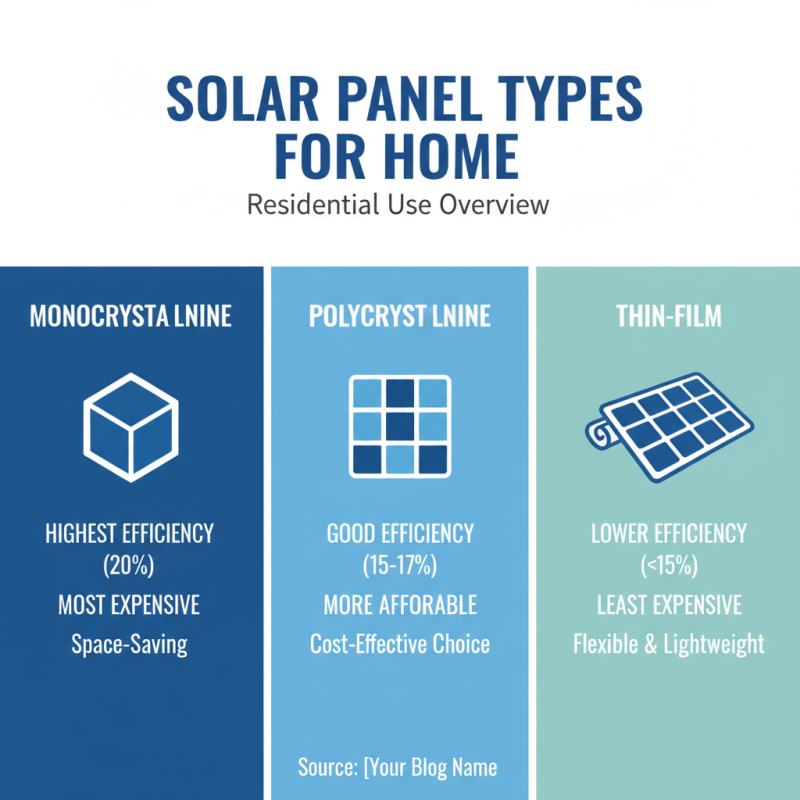
When considering solar panels for residential use, it's essential to explore the main types available. Most homeowners opt for three primary types: monocrystalline, polycrystalline, and thin-film. Monocrystalline panels usually offer the highest efficiency, often exceeding 20%. However, they are also the most expensive option. In contrast, polycrystalline panels are more affordable, with efficiencies ranging from 15% to 17%. Their slightly lower performance may not always justify the lower price, depending on the specific energy needs of a household.
Thin-film solar panels provide a lightweight and flexible alternative. They typically have lower efficiencies, around 10% to 12%. However, their lower performance isn’t their only downside. Installation can also require more space. Homeowners need to weigh the trade-offs carefully. While thin-film might work for larger roofs, it may not fit smaller spaces well.
Recent industry reports indicate that the solar market is growing rapidly, with a projected annual growth rate of 20% over the next five years. This expansion could impact panel availability and prices. Technology advancements may further increase efficiencies across the board. Nevertheless, the decision between these types remains a personal one. Costs, efficiency, and roof space all play a vital role in selecting the right panel for your home. The balance between initial investment and long-term savings can be tricky to navigate.
Key Factors to Consider When Choosing Solar Panels
When considering solar panels for your home, various factors play a crucial role in your decision. Efficiency is a key metric. According to the National Renewable Energy Laboratory, the most efficient panels can convert over 22% of sunlight into electricity. Higher efficiency means more energy production in smaller space. This is particularly vital if roof space is limited.
Another significant factor is the type of solar panel technology. Monocrystalline panels are often praised for their efficiency and longevity. However, they can be more expensive. Polycrystalline panels, while slightly less efficient, can be a more budget-friendly option. The choice depends on individual circumstances and priorities. A study by SolarPower Europe highlights that nearly 20% of homeowners feel confused about the right choice, often regretting their decision later.
Cost and incentives should also be a part of the discussion. The installation cost has been declining, but it is still a major investment. A report from the Solar Energy Industries Association noted that the average cost per watt has fallen by 70% in the last decade. Still, local rebates and federal tax incentives can affect your final financial outlay. Balancing these elements can be challenging, leading some homeowners to make hasty choices that do not meet their long-term needs.
Comparison of Monocrystalline, Polycrystalline, and Thin-Film Panels
When selecting solar panels, understanding the differences between monocrystalline, polycrystalline, and thin-film is crucial. Monocrystalline panels are known for their high efficiency. They occupy less space, making them ideal for smaller roofs. These panels perform better in low light but come with a higher price tag. Their sleek design often attracts homeowners.
Polycrystalline panels are more budget-friendly. They are made from multiple silicon crystals, resulting in lower efficiency. However, they are easier to produce, and this lowers their cost. While polycrystalline panels might take up more space, their durability is commendable. Homeowners often weigh cost against performance while choosing these.
Thin-film panels are lightweight and flexible. They can be integrated into various surfaces, like roofs or windows. Their installation is easier, but they generally have lower efficiency compared to the other types. They can be less efficient in smaller areas, requiring more space for the same energy output. Each type has its pros and cons, urging potential buyers to reflect on their individual needs.
Evaluating Solar Panel Efficiency and Performance Ratings
When considering solar panels for your home, performance ratings matter. The efficiency of a solar panel indicates how much sunlight it converts into usable energy. Higher efficiency means more energy production in less space. Typically, panels with 15-22% efficiency are available.
Choosing the right type also involves understanding the ratings provided by certification bodies. These ratings evaluate a panel’s durability and performance under different conditions. For example, how does a panel perform in low light? What is its temperature coefficient? Such details should influence your decision.
Tips: Look for panels with higher efficiency ratings if space is limited. Measure your roof area accurately. It’s also wise to request performance data for real-world conditions. Consider how your energy needs may change over time. It’s important to balance cost and long-term benefits. Don’t rush. Each choice has its consequences.
Understanding Installation and Maintenance Requirements for Solar Panels
Installing solar panels can be a complex task. Homeowners must consider various installation and maintenance requirements. The average installation time for solar panels is about one to three days. However, factors like home size and roof type impact this timeline. A study by the National Renewable Energy Laboratory (NREL) shows that improper installation can lead to a decrease in energy efficiency by up to 20%. This highlights the importance of hiring certified professionals.
Maintenance is often overlooked. Regular inspections ensure that panels are clean and functioning properly. Dust, dirt, or debris can block sunlight and reduce efficiency. According to a report from the Solar Energy Industries Association (SEIA), poorly maintained systems can lose between 5%-30% of their potential energy output. Cleaning panels is usually simple but may require hiring a professional, which adds to the overall cost.
Moreover, weather can create challenges. Hail, snow, or heavy rain may affect the panels' durability. It's essential to consider local weather patterns when selecting panels. Regular checks can help identify any damage early. Some homeowners find it daunting to keep up with these tasks. It’s vital to reflect on your ability to maintain your solar system effectively.
Comparison of Different Types of Solar Panels