2026 Top Trends in Solar Energy System Innovations for Sustainable Living?
As we approach 2026, innovations in the solar energy system are shaping sustainable living. Dr. Emily Rodriguez, a leading expert in renewable energy, stated, "The future of solar energy systems lies in their integration into daily life." This perspective highlights the increasing relevance of solar technology.
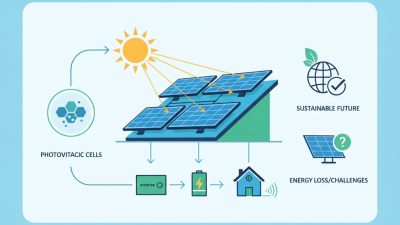
In recent years, advancements have accelerated. New materials are making solar panels more efficient and affordable. Smart grids are optimizing energy usage, ensuring reliability. However, there are still challenges in storage solutions and widespread adoption. Some regions lag behind, lacking infrastructure and investment.
Reflecting on these developments, we must ask critical questions. Are we doing enough to support these innovations? Can we bridge the gap between technology and accessibility? The evolution of solar energy systems requires collaboration between experts, industry leaders, and communities. Together, we can foster a more sustainable future.
Innovations in Solar Panel Technology: Efficiency and Design Improvements
Recent advancements in solar panel technology emphasize efficiency and design improvements, shaping the future of sustainable living. New materials are enhancing energy conversion rates. For instance, perovskite solar cells have shown potential efficiencies exceeding 25%. This surpasses traditional silicon panels, which average around 20% efficiency. However, production scalability and longevity remain crucial challenges.
Furthermore, design innovations are focused on aesthetics and integration. Building-integrated photovoltaics (BIPV) allow solar panels to blend with architecture. These systems are not only functional but also enhance property value. A report from the International Renewable Energy Agency (IRENA) indicates that BIPV could capture around 30% of urban energy demand by 2026. Yet, concerns about the durability and maintenance of such integrated solutions persist.
Battery storage advancements play a critical role in solar efficiency. Improved lithium-ion batteries now offer better storage and longer life cycles. Energy stored during sunny periods can power homes at night. Despite these strides, the high initial costs remain a barrier for many consumers. Overall, while innovations are driving solar energy forward, some existing gaps need to be addressed for wider adoption.
2026 Top Trends in Solar Energy System Innovations for Sustainable Living
This bar chart displays the innovation trends in solar panel technology focusing on efficiency improvements and design aesthetics over the years. The data illustrates the projected advancements in various areas by 2026.
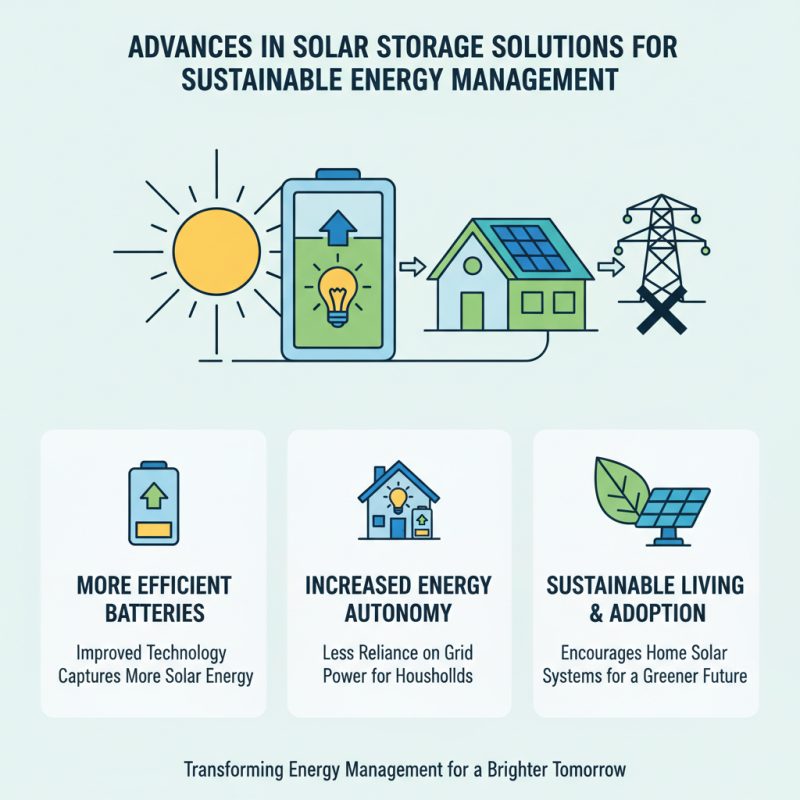
Advancements in Solar Storage Solutions for Sustainable Energy Management
The advancement of solar storage solutions is transforming energy management. Battery technologies are becoming more efficient at capturing solar energy. As storage improves, households can rely less on grid power. This shift is crucial for sustainable living. Increased energy autonomy encourages homeowners to adopt solar systems.
Innovations such as liquid batteries and flow batteries are emerging. They provide longer life cycles and quicker charging. However, integrating these technologies remains a challenge. Costs and installation complexities can deter potential users.
Moreover, community solar initiatives gain traction. These projects allow multiple users to share a solar energy source. This collective approach promotes inclusivity but raises questions about access and equity. As we explore these innovations, it’s vital to ensure that they benefit a broad audience, not just a select few.
Integration of Solar Energy with Smart Home Systems for Enhanced Efficiency
The integration of solar energy with smart home systems is emerging as a pivotal trend for enhancing energy efficiency. According to a report by the International Renewable Energy Agency (IRENA), homes equipped with solar panels can reduce their energy bills by up to 70%. This significant reduction is due to the synergy created between solar energy and smart devices.
Smart home technology enables real-time energy monitoring. Systems can optimize the use of solar energy by routing it to devices based on energy demands. For instance, energy consumption can be minimized during peak hours. Furthermore, smart thermostats adjust heating and cooling based on solar availability, often increasing comfort while reducing waste.
Adopting these technologies isn't without its challenges. Initial setup costs can deter homeowners, and not all regions have adequate sunlight year-round. Additionally, compatibility issues can arise with existing home systems. As homeowners navigate these concerns, data from the National Renewable Energy Laboratory (NREL) suggests that a well-integrated system can increase the overall efficiency of a household by around 25%. These are encouraging figures. However, ongoing education about technology and its benefits remains crucial for wider adoption.
Emerging Trends in Solar Energy Policy and Regulations for 2026
As we look towards 2026, solar energy policy and regulations are poised for transformative changes. According to the Solar Energy Industries Association (SEIA), the U.S. solar market is projected to install over 328 gigawatts (GW) of new capacity by 2026. This surge is driven by policy adjustments aimed at integrating more renewable energy sources into the grid. A key trend will be the push for streamlined permitting processes. Faster approvals can significantly enhance solar installation rates, yet many regions still face bureaucratic bottlenecks.
Legislation is also evolving to promote community solar projects. These allow shared access to solar power for multiple households, especially in urban settings. The National Renewable Energy Laboratory (NREL) estimates that community solar could provide electricity to over 20 million households by 2026. However, state-level regulations often lack uniformity, creating confusion about participation and benefits. Enhanced clarity and consistency in policies will be critical to maximizing participation in these programs.
Moreover, there is a growing emphasis on integrating storage solutions with solar installations. Energy storage policies may soon mandate that new solar projects include battery systems. This will help stabilize the energy supply and enhance grid resilience. Yet, the initial cost of these systems can be prohibitive for many. Balancing affordability with innovation will be a significant challenge moving forward. Each of these regulatory shifts reflects a complex landscape, requiring careful navigation to avoid potential pitfalls.
2026 Top Trends in Solar Energy System Innovations for Sustainable Living
| Trend |
Description |
Impact on Sustainability |
Policy Implication |
| Building-Integrated Photovoltaics (BIPV) |
Integration of solar panels into building materials. |
Reduces urban heat islands and enhances energy efficiency. |
Incentives for construction of energy-positive buildings. |
| Advanced Energy Storage Solutions |
Improved battery technology for solar energy storage. |
Increases renewable energy reliability and reduces waste. |
Regulations supporting grid-integrated storage systems. |
| Community Solar Projects |
Collective investments in shared solar installations. |
Makes solar energy accessible to more populations. |
Support for collective purchasing agreements and zoning laws. |
| Dynamic Solar Pricing |
Real-time pricing models for solar electricity. |
Enhances energy consumption patterns, leading to less waste. |
Framework for real-time energy pricing regulations. |
| Solar-Powered Water Purification |
Use of solar energy for clean water production. |
Improves access to clean water sustainably. |
Funding and incentives for solar water projects. |